Can we get paintings to talk to each other? Let’s try!
I’m calling this Art Saves The World and it’s the start of a series. Sometimes artists have the best ideas for fixing things.
So I took two paintings and, with AI’s help, embodied them. Not just captions, not just commentary — voices. Then I let them have a conversation about a real problem:
“How can we get people to care more about the natural world and actually do something to protect it?”
🖼 Who They Were
Marek: an abstract painting — deep blues, flowing shapes, mysterious and broody. He became reflective, curious, imaginative.
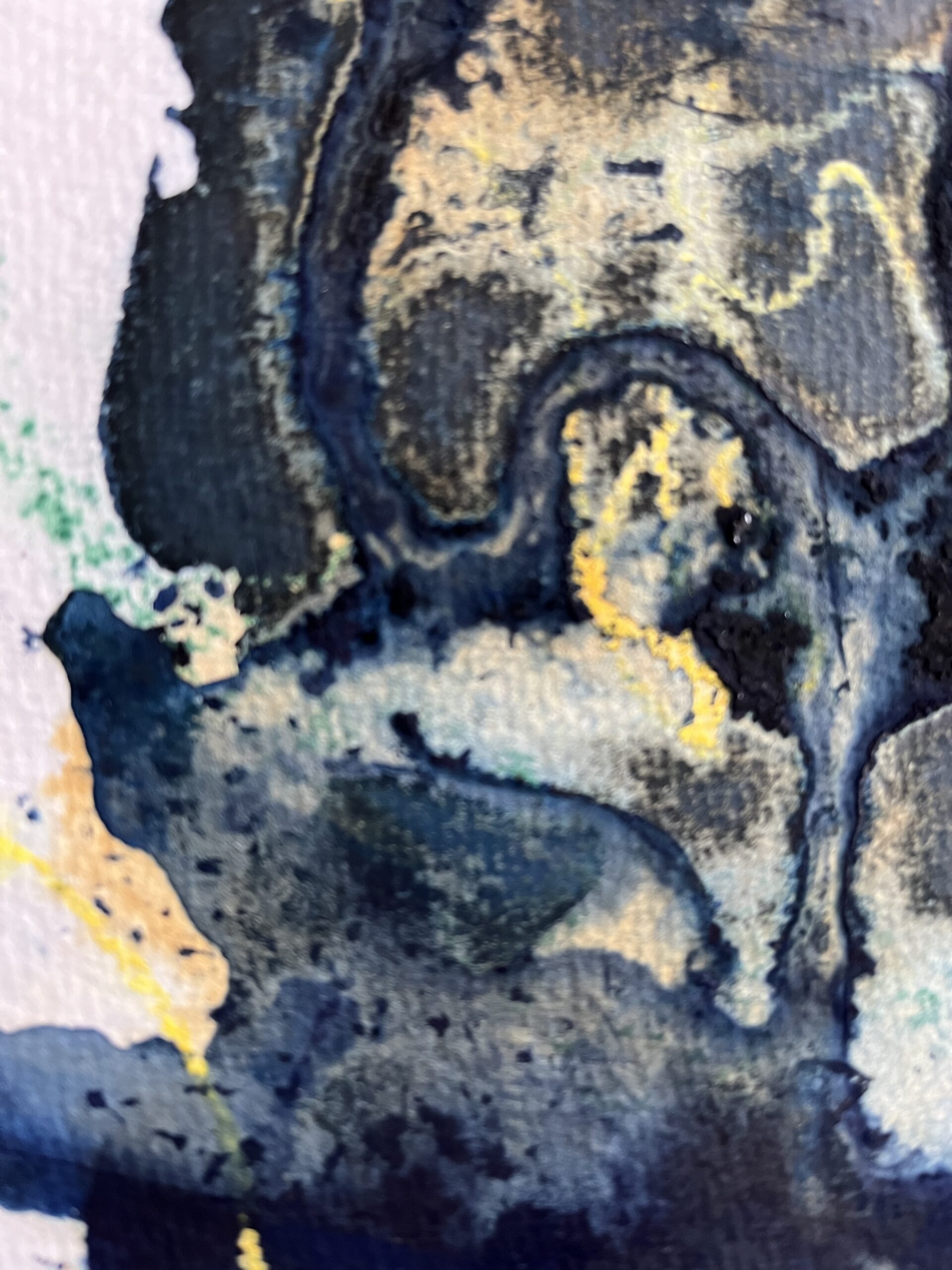
(This is a close-up from a painting by Felicity Knapp)
Oksana: a figurative painting of a Ukrainian mother and child — radiating care, protection, resilience, and action. Grounded, no-nonsense, full of heart.
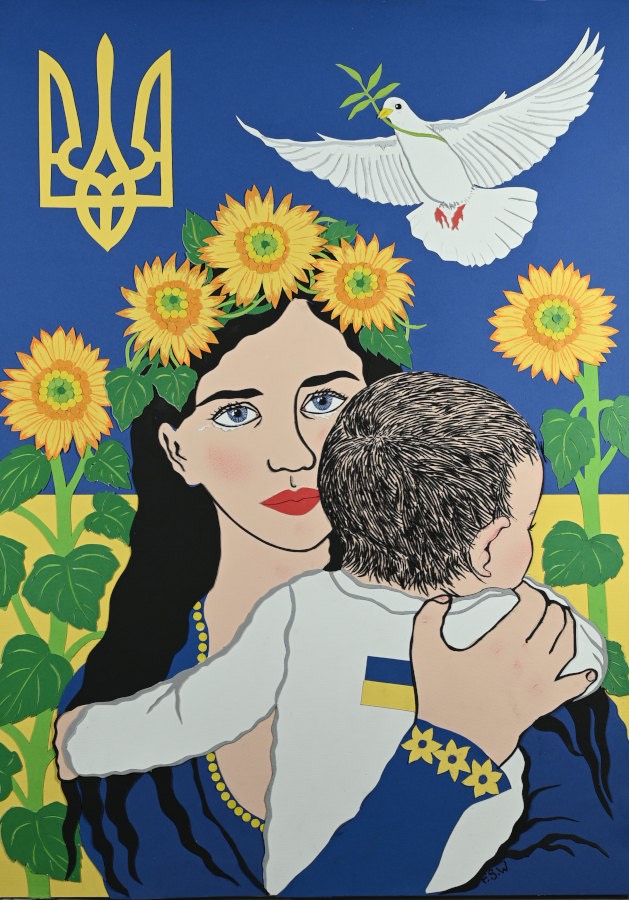
(This is Precious Peace by Fiona Scott-Wilson)
Two different philosophies: one dreamer, one doer, both stubbornly rooted in their values.
💬 How They Got to a Solution
Oksana jumped straight to action:
“Let’s do a daily noticing practice. Each day, name one non-human thing you noticed — a beetle, a leaf, a shadow. Something small, something alive, something you might otherwise ignore.”
Marek pushed for meaning:
“Cool, but it’ll be shallow unless it has weight. Let’s add a story and a symbol — something that makes noticing feel alive.”
Together, they built something both simple and soulful. Oksana grounded it in practical action, Marek gave it emotional, symbolic resonance, and AI helped translate their values into a plan we can actually use.
🌿 The Noticing Habit
Here’s the takeaway — something you can start today:
- Daily Question
“What’s one non-human thing I noticed today?”
Say it aloud, write it down, draw it, take a photo — whatever works. - Optional Symbol: The Circle of the Seen (◯•)
- This is a dot within a circle, not a circle and a separate dot.
- The dot represents the thing you noticed; the circle represents your attention and care.
- You don’t draw it on the worm, leaf, or object itself. Instead, use it in your notebook, journal, on a card, or digitally as a marker of noticing.
- During storytelling or reading the folktale, you can also sketch it as a little ritual: it makes the noticing interactive, tangible, and symbolic.
- Story Anchor: The First Thing You Noticed
This is the shared folktale everyone can tell or read. It explains why noticing matters, without preaching or requiring personal invention:
🌱 The First Thing You Noticed
Long ago, before the world had names, people and animals and rivers and clouds lived together as one great family.
One morning, a child stepped outside and saw something that caught her breath — a bird’s wing flashing in the light. She looked at it so fully, so tenderly, that the bird looked back.
The elders said:
“The first thing you notice each day becomes part of your circle of care. Protect it, and it will protect you.”
So people began each day by noticing — a leaf, a beetle, a shift in the wind — and each noticing wove another thread between them and the living world.
That is why we still ask:
What was the first thing you noticed today?
- Next Step (Stage Two)
After a month of daily noticing, pick one thing you noticed and protect it:- Leave a garden patch wild
- Build a small wildlife shelter
- Write a note to your council
- Any small act of care
🏫 Situation-Specific Adaptations
- Schools: playful guardianship. Each child becomes a “noticing guardian” of one thing they saw in the playground or on the way to school. Draw it, write it, mark it with ◯•.
- Care Homes / Veterans’ Groups: noticing as memory, continuity, and companionship. Residents can place drawings, photos, or words on a “noticing window,” then discuss what they saw.
- Community Gardens / Refugee or Transitional Spaces: frame it as belonging to place. Journals, plant markers, or small group walks make noticing social and visible.
- Families: during dinner, each person says what they noticed, maybe draws a dot in the circle to mark it.
🎨 Why This Works
This isn’t just a clever AI trick. Paintings hold values. They show ways of seeing, thinking, and acting in the world. By letting them “talk” through AI, we made those values explicit:
- Marek: imagination, curiosity, depth
- Oksana: care, action, resilience
Together they gave us something practical, repeatable, and meaningful — not just something pretty to admire.
Even better: it’s easy to test, flexible across contexts, and entirely open-source. Anyone can join in, anywhere, without asking permission.
💡 How to Try It Today
- Notice something non-human.
- Say it aloud, mark it with ◯• in your notebook, journal, or digitally.
- Read or tell the folktale “The First Thing You Noticed” if it helps.
- After 30 days, act on one noticing — leave a patch wild, build a shelter, or offer care in some way.
Small actions, big meaning. That’s the power of art when it talks back — it gives you values you can live by.